Black Mold?
Don't Take Chances! Call the Top Black
Removal Company in Saint Joseph and get cleaned up FAST!



Why Choose Us?
- Certified Pros
- Available 24/7/365
- Rapid Response
- Fully Licensed And Insured
- We Work With Your Insurance Company
Call Now (816) 816-5640
Professional Mold Removal in Saint Joseph, Missouri
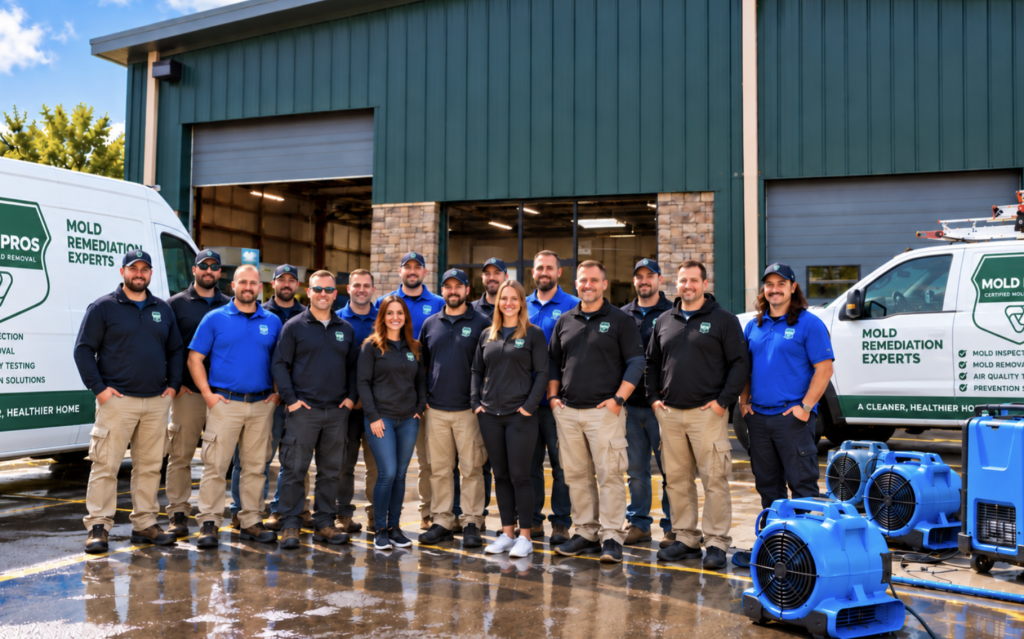
Mold removal should address the moisture problem and the materials it affected. Our team at Saint Joseph Mold Remediation Pros follows the condition of the building from the first visit through final cleaning. We look at where water entered, how far it traveled, and which surfaces need cleaning or removal. The work plan changes for a damp crawl space, a flooded basement, an attic leak, or mold behind a wall.
What happens during a mold removal project?
The first visit focuses on the affected area, moisture source, materials, and nearby spaces. We look for roof, window, plumbing, drainage, humidity, HVAC, and foundation issues that help explain the growth. We also identify surfaces that should stay in place and materials that cannot be reliably cleaned. That information guides the work area, containment plan, equipment needs, and cleanup sequence.
Containment means using plastic walls or barriers to limit the movement of mold dust. Workers use protective equipment and controlled removal methods around affected materials. A HEPA air scrubber filters fine particles from the air while work is underway. Unaffected rooms, furnishings, and building areas receive protection before removal begins.
Porous materials often need more care than hard, non-porous surfaces. Drywall, insulation, carpet, and some padding absorb water and can hold growth below the visible surface. Concrete, metal, sealed tile, and some finished wood may be cleaned when their condition allows it. Framing, subflooring, and attic materials receive a closer review because hidden moisture can remain inside or beneath them.
What’s Included
Our mold removal scope centers on controlling spread, addressing affected materials, and cleaning suitable surfaces. The exact work depends on the moisture source, the work-area size, access, and the condition of the building. We explain the planned tasks before work begins so you know what the crew is addressing. A useful scope may include the following services.
- Work-area protection and containment barriers.
- HEPA air filtration and controlled removal of affected porous materials.
- Cleaning of suitable hard surfaces and nearby areas affected by dust.
- Source-control recommendations for leaks, humidity, drainage, or ventilation problems.
Removal is not the same as wiping a visible patch. Drywall, insulation, carpet, and damaged padding often leave the building when growth or water damage reaches them. Hard surfaces such as concrete or tile receive cleaning when they are structurally sound and accessible. We avoid disturbing unaffected materials simply because they are near the work area.
What’s Not Included
Mold remediation does not automatically include rebuilding the room after removal. Painting, drywall replacement, flooring installation, cabinetry, finish carpentry, roofing, plumbing repair, and electrical work require separate decisions or contractors unless specifically included in a written scope. We also do not promise that an insurer will approve a claim or pay every repair. The moisture source still needs correction so the cleaned area does not become wet again.
- Full reconstruction or finish replacement after demolition.
- Independent mold testing or laboratory identification.
- Repairs to roofs, plumbing, foundations, drainage, or HVAC systems.
We do not perform mold testing as part of this service. Independent testing or assessment can help when the extent or type of a concern needs separate documentation. Missouri does not certify mold testers or set indoor mold exposure limits, according to the Missouri Department of Health and Senior Services. For a fuller explanation of warning signs, testing questions, and safe first steps, read our mold warning signs guide.
How St. Joseph building conditions affect a mold project
St. Joseph properties often face moisture patterns that differ by location and construction. Spring and summer thunderstorms bring heavy rain, while river, creek, and drainage problems affect some properties more than others. The Missouri River forms the western edge of the city, and floodplain conditions require separate attention to drying and affected materials. A property near a mapped floodplain should be reviewed with its water source, finished-floor level, and drying history in mind.
Older homes and commercial buildings also need careful material decisions. Historic masonry, wood framing, older windows, and mixed-use layouts can create several paths for water entry. A leak around a window may wet a wall cavity, while a roof problem may affect an attic and ceiling below. Work on a designated historic property may also require questions for the City of St. Joseph Planning and Community Development office before repairs change visible building features.
Crawl spaces are common moisture concerns in this region because exposed soil, weak drainage, missing vapor barriers, and humid air keep framing damp. Basements face different problems, including foundation cracks, hydrostatic pressure, failed waterproofing, and water after heavy rain. Indoor humidity above about 60 percent also supports mold growth without a visible leak. We look at the building system rather than treating only the spot that first caught your eye.
Which materials need removal instead of cleaning?
Drywall is often removed when water or growth extends behind its finished face. Insulation and carpet can hold moisture and debris, making surface cleaning unreliable. Subflooring and framing need evaluation for swelling, staining, odor, and hidden dampness before they remain in place. Concrete and tile are usually more stable cleaning surfaces, but cracks, grout, backing materials, and trapped moisture still matter.
Attic work requires attention to roof leaks, wet sheathing, insulation, and bathroom or dryer vents that terminate in the attic. Crawl-space work may involve joists, subflooring, vapor barriers, and standing or recurring moisture. Commercial buildings add larger work areas, shared air systems, occupied schedules, and varied materials. Schools, medical facilities, offices, apartments, churches, retail properties, and industrial buildings should receive a scope that matches their occupants and layout.
People often use the term black mold for dark-looking growth, but color alone does not identify a species. The visible color does not determine the cleaning method or prove the source of the moisture. We focus on affected materials, moisture conditions, and safe removal controls. Health questions should go to a doctor or a public-health resource such as the Missouri Department of Health and Senior Services.
What affects project cost and job size?
Actual mold remediation costs vary based on affected materials, work-area size, containment needs, access, and the moisture source. An inspection is needed before a final scope and price can be provided. A small accessible area may require less protection and removal than mold spread through a wall, attic, crawl space, or shared commercial space. Floodwater, sewage contamination, hidden moisture, and difficult access also change the work plan.
Insurance documentation often starts with photographs, dates, moisture-source records, and invoices for emergency work. Keep damaged-material photos before removal when doing so is safe, and save reports from plumbers, roofers, or other repair providers. Your insurance carrier decides coverage and payment, not the remediation contractor. For flood-related conditions, separate policy rules and documentation requirements may apply.
Occupancy depends on the work area, containment, equipment, odors, material removal, and the building’s use. A contained project may allow people to remain in separate areas, while extensive work in a small home or shared facility may require temporary relocation. We discuss access and protection before work begins. People with health concerns should ask their physician whether they should avoid the work area.
Credentials and local resources
Saint Joseph Mold Remediation Pros is IICRC certified. We are in good standing with the BBB. Those credentials do not replace a project-specific inspection or explain every moisture condition in a building. Our scope still follows the materials, moisture source, access, and containment needs found at the property.
Local records can help clarify property conditions before repair decisions are made. Buchanan County GIS can help with parcel and floodplain context, while Buchanan County Emergency Management provides storm and disaster information. The City of St. Joseph Health Department is a local resource for environmental-health questions. These resources do not replace remediation, but they can help you gather useful property and event information.
For floodplain, planning, or building-context questions, review the Buchanan County GIS and City of St. Joseph Planning and Community Development resources. Missouri DHSS also provides guidance on mold, drying, and disaster recovery. Keep records of the moisture event, affected rooms, visible damage, and any steps taken to stop the source. That preparation helps the first visit focus on the building instead of missing details.
If water is still entering, shut off the source when it is safe and keep people away from unsafe areas. Call (816) 816-5640 to discuss the affected room, moisture event, and what you noticed. We will explain what information helps us understand the project before arranging the next step. Do not paint over visible growth or close wet materials inside a wall, ceiling, attic, or crawl space.
Frequently Asked Questions
How do you handle mold after flooding in St. Joseph?
Flood-related work starts with identifying the water source and separating affected materials from clean areas. Materials exposed to contaminated water receive special attention because cleaning alone may not make every porous surface suitable to keep. Drying conditions, flood depth, time since the event, and access all affect the scope. Floodplain and disaster information from local or state authorities can also help document the event.
Do all dark spots require removal?
No, a dark spot does not by itself show what material is affected or whether removal is needed. Color cannot identify a mold species or determine the extent behind a surface. The condition of the material, moisture history, and access guide the decision. Avoid sanding, scraping, or painting over an area before it has been evaluated.
What should I do before a remediation visit?
Stop active water when safe, move people away from the affected area, and avoid disturbing visible growth. Write down when you noticed the problem and what caused the moisture if you know. Take photographs from a safe distance and keep records from plumbers, roofers, or flood officials. Do not remove wall materials unless an urgent safety issue requires it.
Can a crawl space cause mold in rooms above it?
Yes, a damp crawl space can keep joists and subflooring wet beneath occupied rooms. Exposed soil, missing vapor barriers, poor drainage, and humid air are common conditions to review. Moisture can also move through openings around pipes, ducts, and wiring. Correcting the crawl-space moisture source is necessary for lasting results.